Sometimes a very short episode of behavior can enlighten you about a child’s mathematical mind. This Zen Math Moment illustrates how an adult can gain entrance into that mind.
Watch and listen and re-watch and re-listen to this video of my interview with Joey, 3 years of age (and I calculate that as of this writing he is now around 40), as we are sitting in the basement of a friend’s home.
I wanted to understand what Joey knows about the counting words (not counting things). I begin by asking, “Can you count out loud for me?”
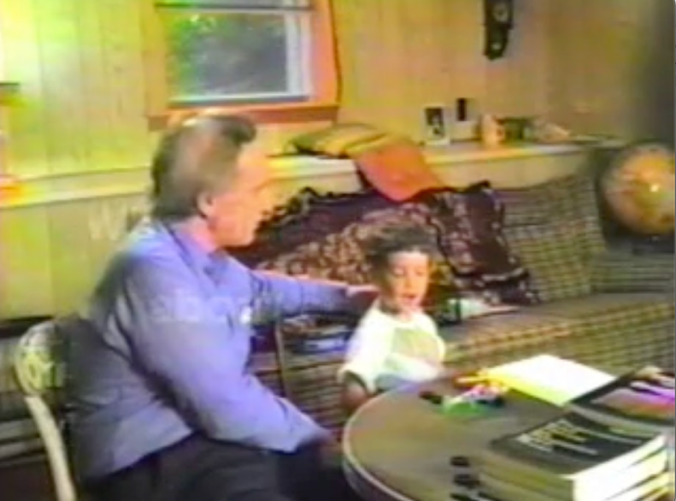
Joey then counts accurately to twelve. I ask him what comes next but he says that he does not know. Clearly, Joey can say the correct number words, in conventional order, from one up to and including twelve.
But what does that mean? One possibility is that Joey’s counting was only a rote regurgitation of number words and nothing else. After all, there is no pattern or principle behind the initial English language number words up to twelve. They are meaningless sounds that need to be memorized.
But I wanted to probe more deeply in order to uncover what Joey knows about this memorized counting. So I continue my investigation. I tell Joey that I am going to count and I want him to tell me if I am making any mistakes.
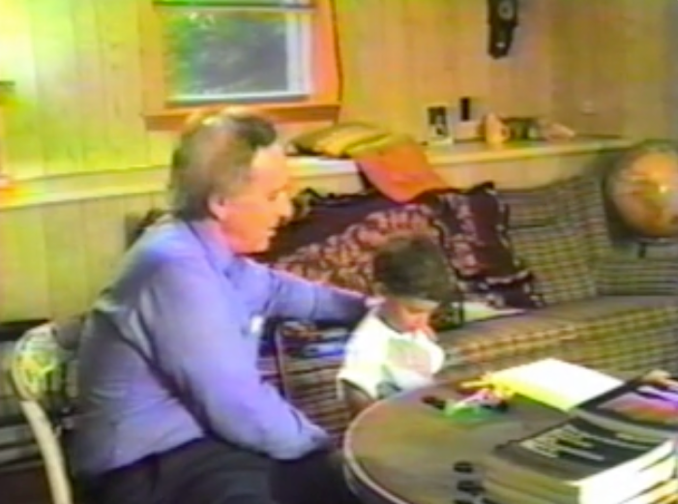
I start with “One, two, three, ten” and very quickly, Joey turns to me, laughs, and says with glee, “You made a mistake!” I reply that I will try again. At this point, because Joey is looking away from me, perhaps at another child in the corner, I ask if he is listening. When he nods that he is, I continue with, “One, two, three, red.” He turns quickly, again greatly amused, and proclaims that “Red’s a color!”
I then start another sequence, “One, two, three, four, five, seven.” Joey stops my counting, informing me enthusiastically that I am wrong. I ask why, and he replies, but I still cannot understand what he said (perhaps something about “the number of houses”?) apart from insisting that I “… did it wrong.”
I make another go of it, counting correctly to ten but then continuing after ten with “nine, eight…” He again finds my mistake hilarious. I ask what I did wrong, and he responds with such a high-pitched soprano voice that I hardly understand what he says, except for “after ten comes something else.”
I continue with “nine, ten…” but he interrupts, informing me that I made a mistake because “you have to start with one.”
Next, I start with one, count correctly to fifteen, and then say, “seventeen, nineteen, thirty, thirty-one, thirty-two, a hundred, two hundred and forty-six.”
For the full Zen experience, you must watch the video to see and hear what Joey says next.
So many things to observe in this video!
- Joey focuses on the task intently.
- He can identify some counting mistakes within the sequence of one to ten.
- He sees humor in an adult’s mistake.
- He knows that he is dealing with numbers, not colors.
- He knows that counting backwards is a mistake when you are counting forwards.
- He believes that you always have to start with one when counting.
In brief, Joey does not just know how to count in the sense of mechanically saying the counting words in the correct order. He has abstract knowledge about the memorized numbers. He can identify mistakes when they occur. He knows when the pattern is broken. He knows the difference between reciting the counting words and saying color names. He knows the difference between counting forward and backwards. And he believes that all counting must start with one. Some of these beliefs are mistaken, but he is a thinker, not merely a reciter of memorized and meaningless sounds.
We learn all this as a result of my “mistake method,” which encourages the child to identify an error and then reflect on it. When asked to explain why a response is wrong, the child may reveal their thinking about it, their understanding about what’s behind an overt counting behavior. The method seems to work because young children think that adults don’t make mistakes and find it hilarious when they do. Children, how wrong you are!
Overall Zen insights:
Even counting out loud, which seems so simple and mechanical, is complex. Children develop ideas about counting (some right, some wrong) at a very young age. Informal math involving counting (and much more!) begins long before the start of formal education.
Adults should not assume that children’s overt math behavior—their right and wrong answers—indicates the full extent of their knowledge. Adults should try to uncover the thinking behind what children do or say. And, dear reader, this advice applies not only to children’s math but to virtually all of their behavior. Try to find out what the world looks like from the child’s point of view. What’s going on inside that little creature’s mind?
Here are some tips for helping:
- DREME has an entire section devoted to counting, both counting words and counting things. This site provides access to material concerning the mathematics of counting, how children learn to count, and how you can explore children’s counting by means of the mistake method and informal interviewing.
- The site also has an activity in which you learn to count in a very different language, Farsi. Doing this may help you understand how children feel when they learn to count, and what kind of learning is involved in mastering the counting words:
- Read a counting book with the child, like Anno’s Counting Book (in English or Spanish):
- Sing counting songs. Here’s one that can be used to help English speakers count in Spanish, and that Spanish speakers can enjoy as well:
Finally: If you have any queries or comments, you can always contact my sensei, Professor Ginsboo, at profginsboo@gmail.com, who will emerge to respond.
More finally: Want to learn more about children’s counting? See chapters 9, 10, and 17 in my book Young Children’s Amazing Math (2025).